The Journal
Japan by Design: Osaka and Tokyo
Osaka is the correction to Tokyo. It is louder, flatter, funnier, and considerably easier to eat in — the local expression kuidaore, roughly 'eat yourself into ruin', is meant as civic pride. It is also, quietly, where a number of Japan's more interesting recent hotels have opened, partly because the land is cheaper than Tokyo's and partly because the city's greatest living architect never really left. What follows is a short circuit of urban Japan through the buildings themselves.
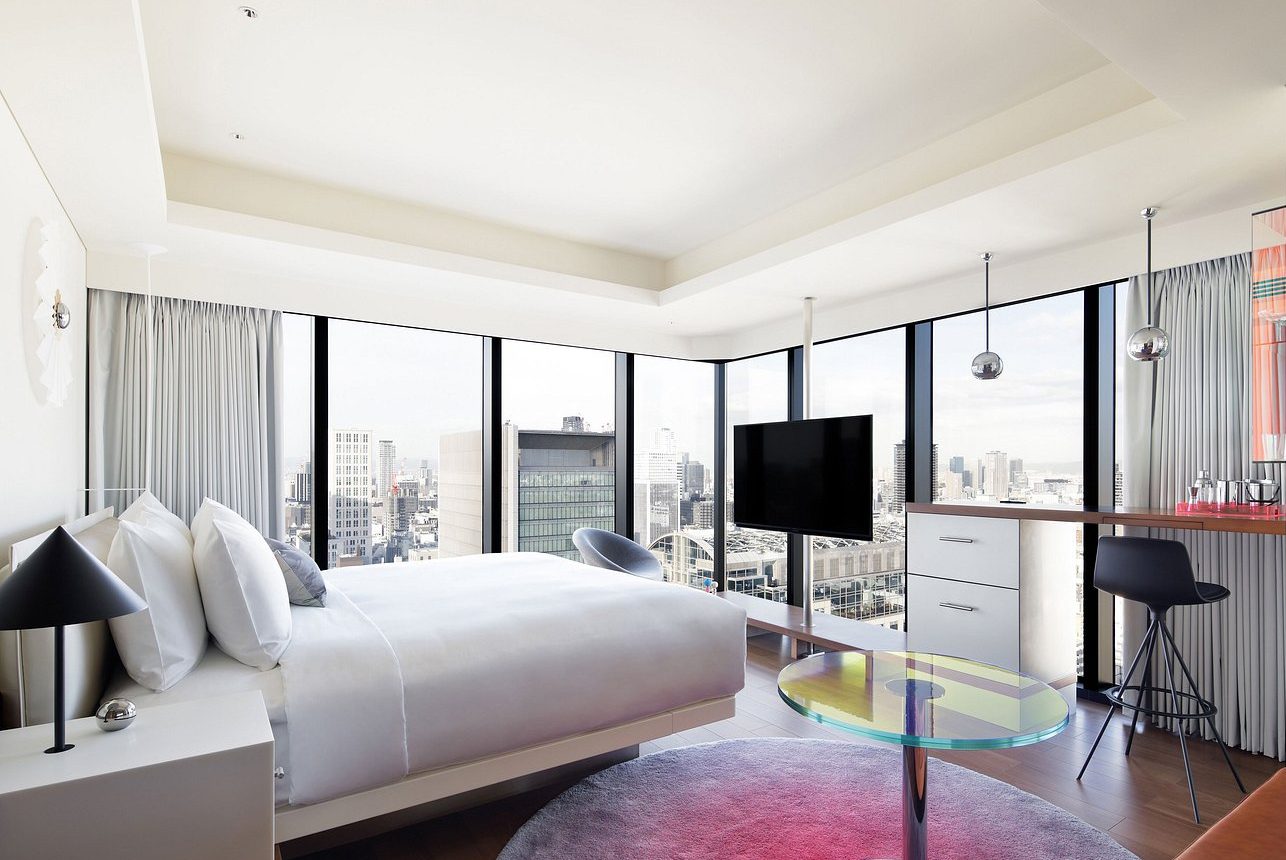
W Osaka
Tadao Ando's black high-rise in central Osaka conceals a burst of colour inside — 337 playful rooms, a serene indoor pool, and a penthouse with its own DJ booth. Ando is the master of grey in-situ concrete, and the joke of this building is that the severe exterior gives way to something close to a nightclub. Worth seeing even if you sleep elsewhere; the ground-floor spaces are open to visitors.
 W OsakaOsaka, JapanSee the hotel →
Zentis Osaka
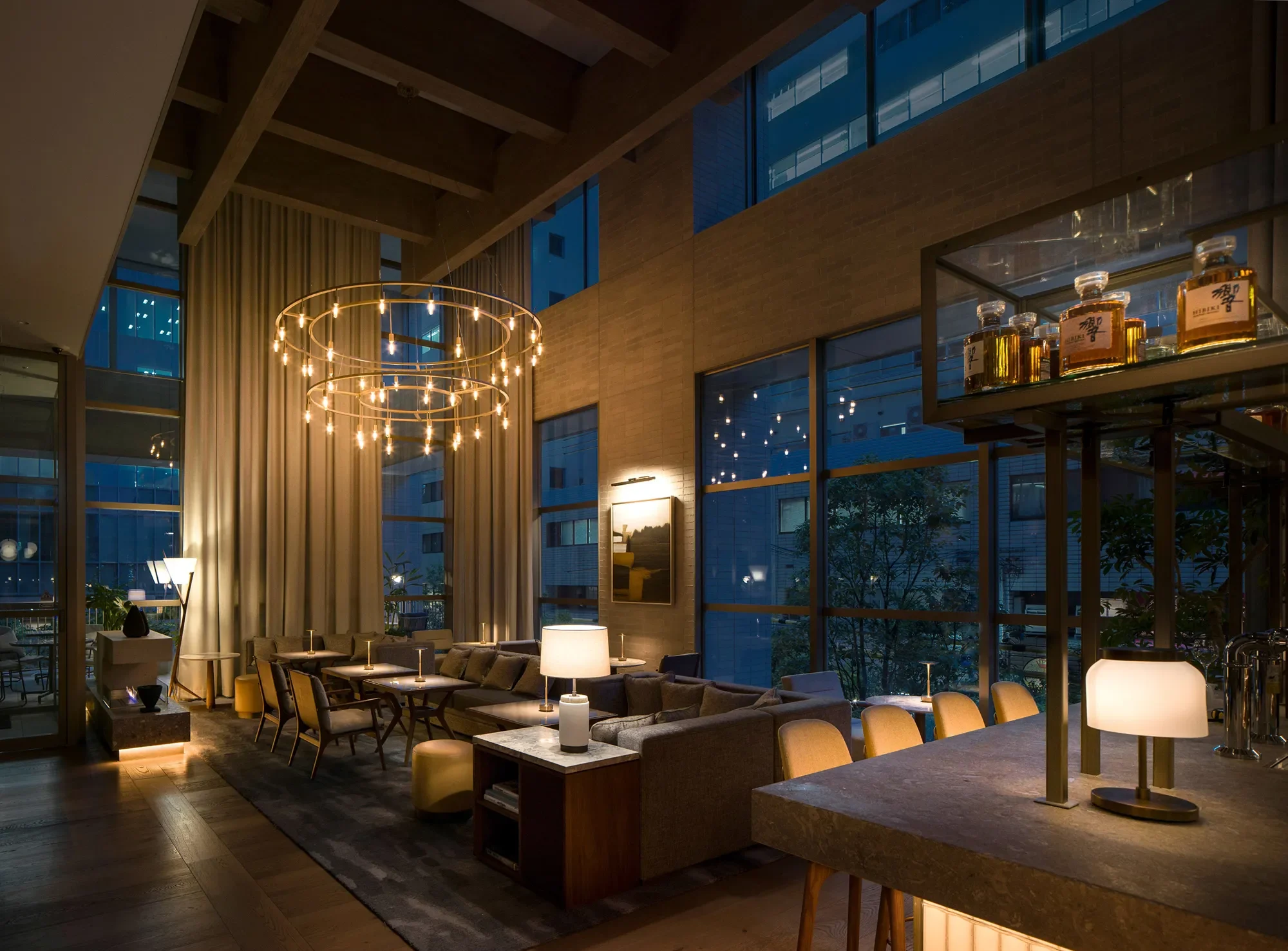
A quiet sixteen-storey address in Dojimahama where Tara Bernerd's 'bento-box' rooms glow in cream and yellow, and the restaurant UPSTAIRZ folds seasonal Japanese ingredients into French technique. The most liveable hotel in Osaka — a lobby you can actually work in, a river position slightly away from the crowds, and rooms sized for a real suitcase.
 Zentis OsakaOsaka, JapanSee the hotel →
OMO7 Osaka
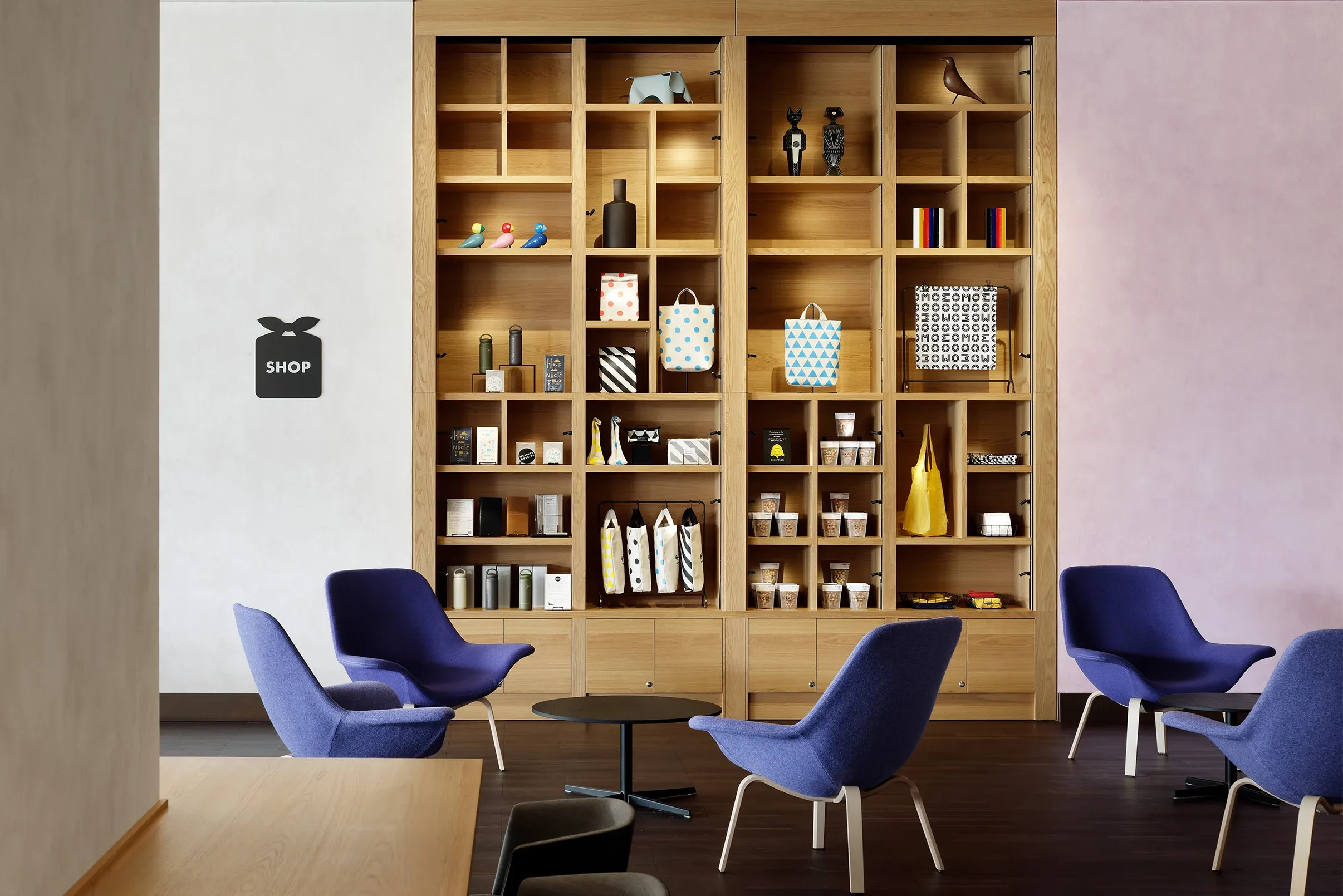
Hoshino Resorts' white building in Shinsekai, a working-class neighbourhood the city long ignored: pastel rooms crossing modern and traditional Japan, some laid with tatami, and an angular public bath house for the evening. OMO hotels are built around their neighbourhoods, with staff-led walking tours of the surrounding streets — in Shinsekai that means kushikatsu counters and an unreconstructed 1950s atmosphere.
 OMO7 OsakaOsaka, JapanSee the hotel →
MUJI Hotel Ginza
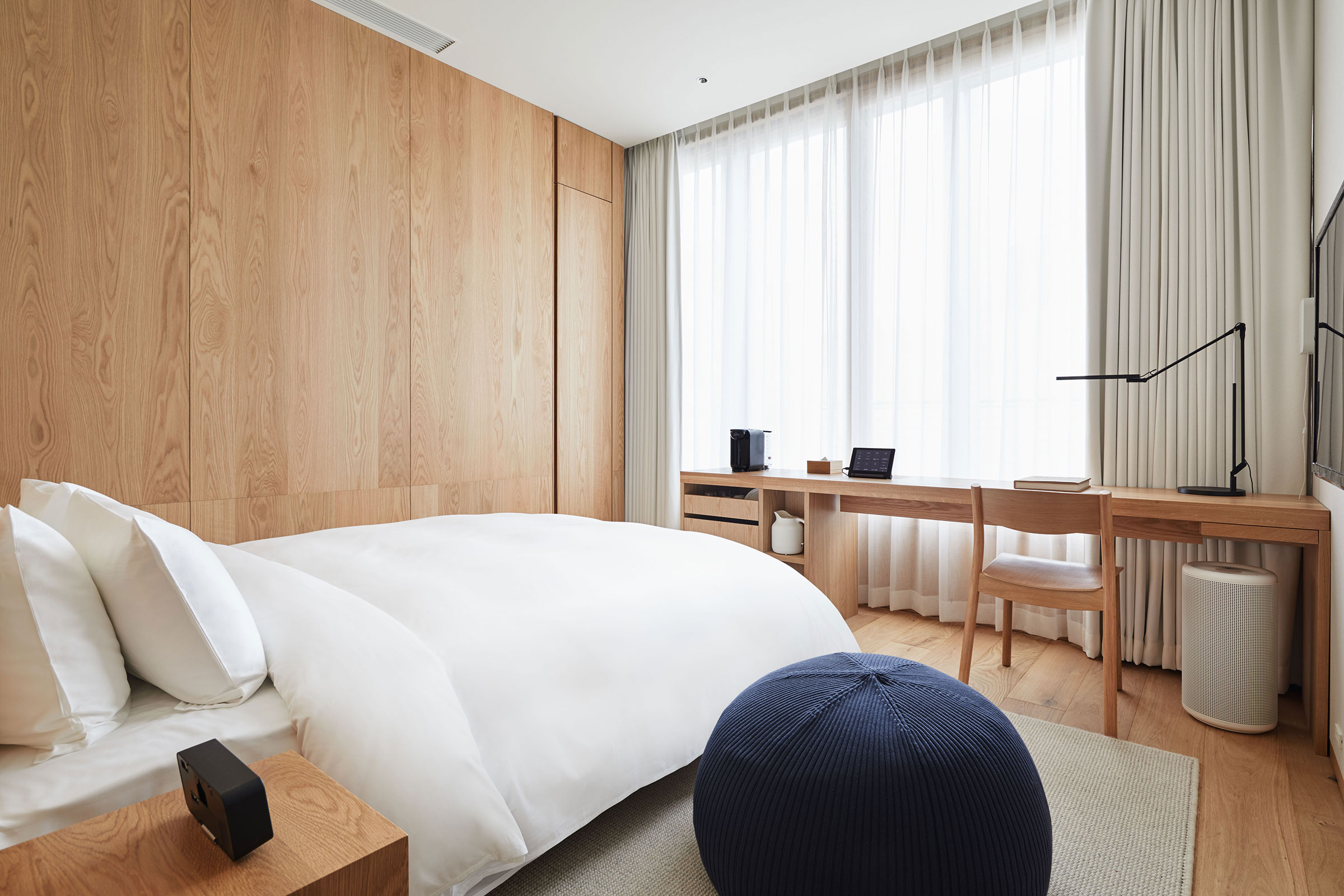
Above the MUJI flagship in Ginza, seventy-six rooms of clean lines and stone bathrooms carry the brand's minimalism upward, with a library and the restaurant WA below. It is exactly what you expect and that is the point: the same oak, the same grey cotton, the same absence of logos, applied to a room. The best-value bed in central Tokyo by a distance.
 MUJI Hotel GinzaTokyo, JapanSee the hotel →
Osaka and Tokyo are two and a half hours apart by Shinkansen, which makes the pairing easy — and if you are doing that journey, reserve a seat on the right-hand side heading east for the Mount Fuji view. Spring and autumn are the obvious seasons; the summer in both cities is genuinely humid. Note that many of these hotels have public baths, which follow the standard etiquette: wash thoroughly at the taps before entering the water.