The Journal
Sleeping in the Balinese Jungle
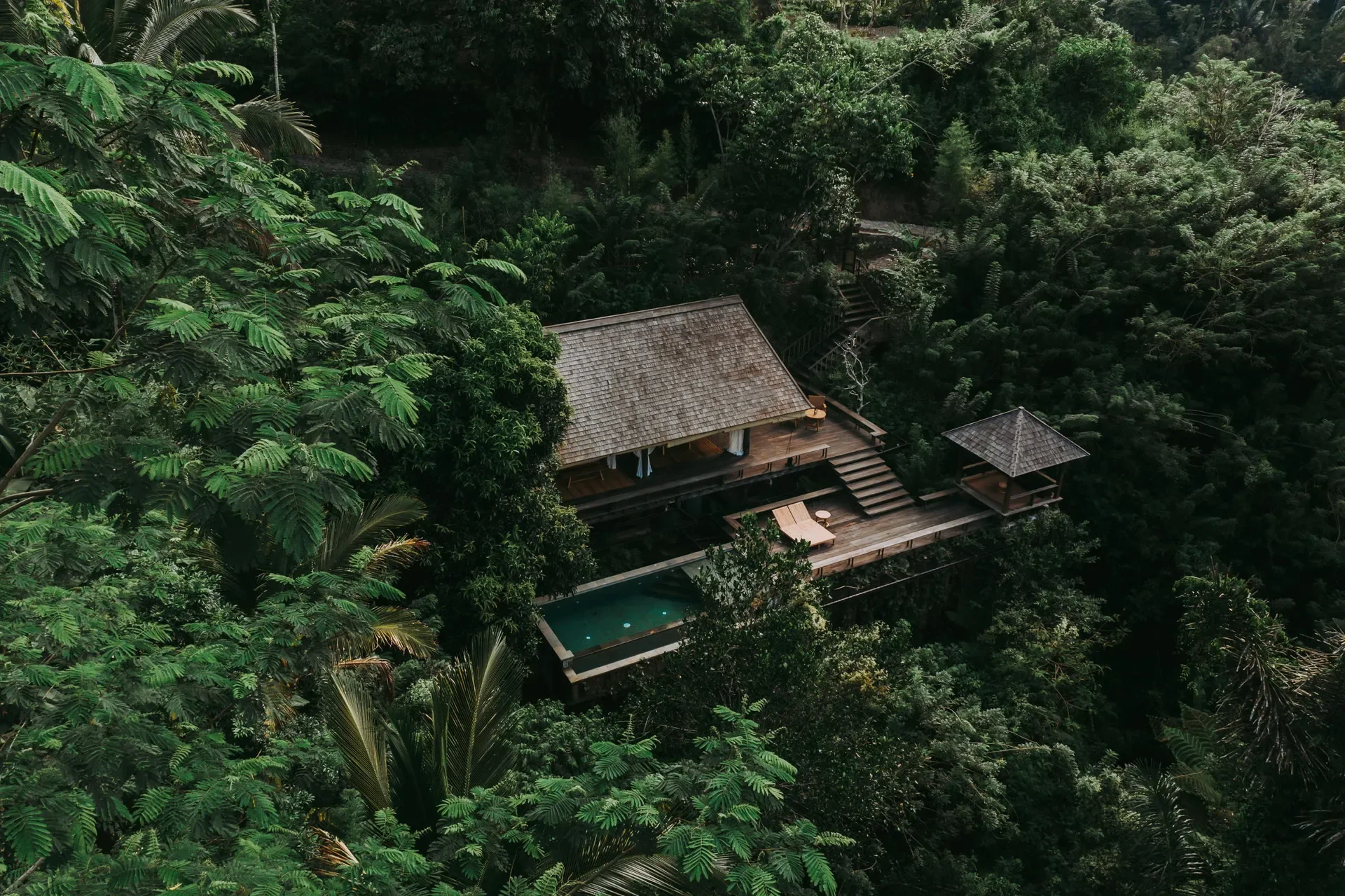
Most of Bali's reputation was built on its beaches, which is unfortunate, because the interior is the better half of the island. North of Ubud the land folds into steep river valleys, the temperature drops a few useful degrees, and the vegetation becomes genuinely dense. The hotels built here have arrived at an unusual consensus: the less building, the better. Walls come off. Roofs stay. What you get is a room that is really a platform, and a night spent listening to a valley rather than looking at one.
Buahan, a Banyan Tree Escape
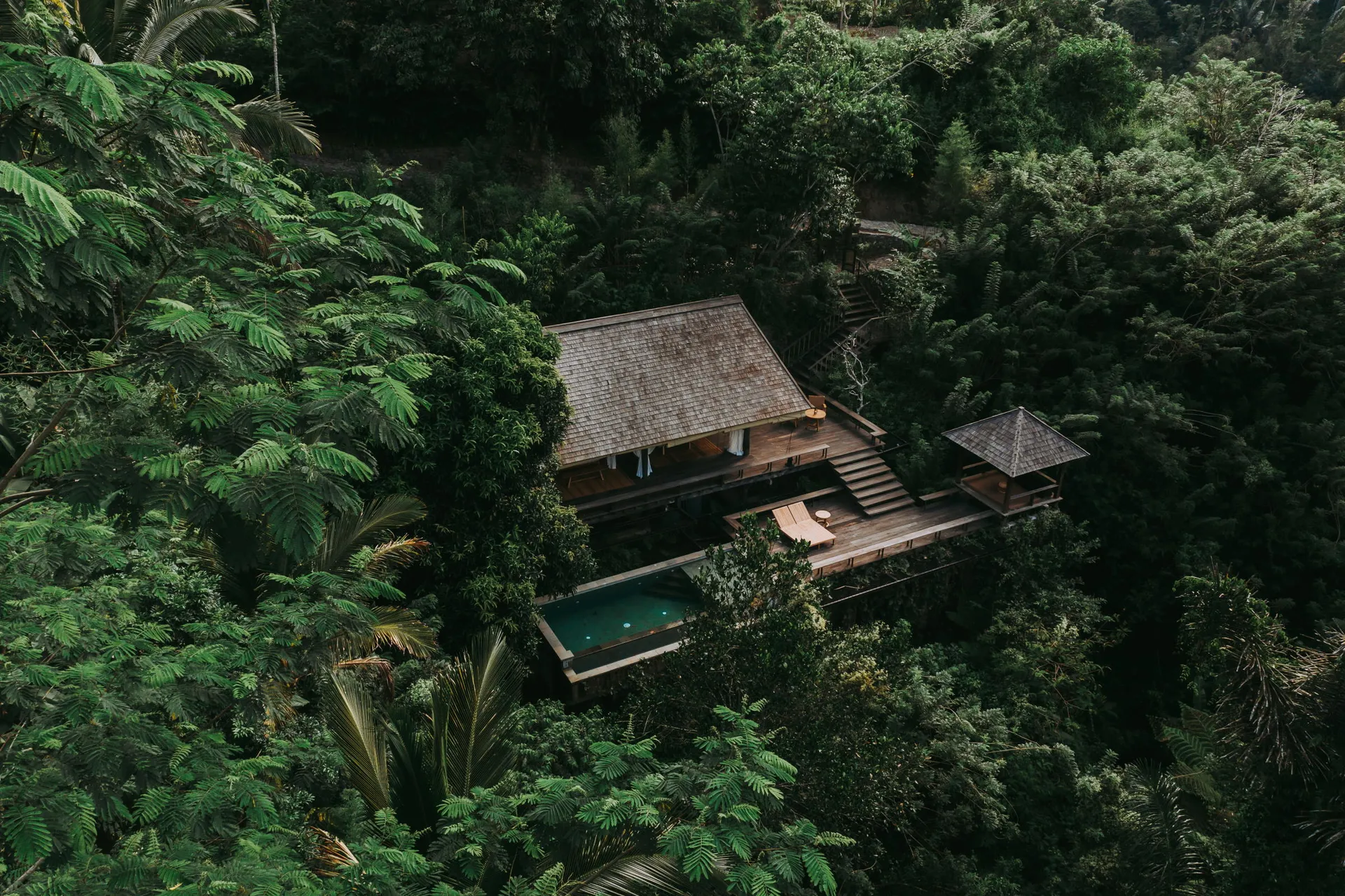
Sixteen open-air villas in the highlands north of Ubud, built deliberately with no walls and no doors — the concept is called 'naked experience', and it is meant literally. Ulin wood salvaged from old boat yards, a plunge pool per villa, and forest on every side. It sounds like a stunt and is not: the valley provides enough privacy that the absence of walls stops being remarkable within an hour, and mosquito nets handle the rest.
 Buahan, a Banyan Tree EscapeBali, IndonesiaSee the hotel →
Capella Ubud
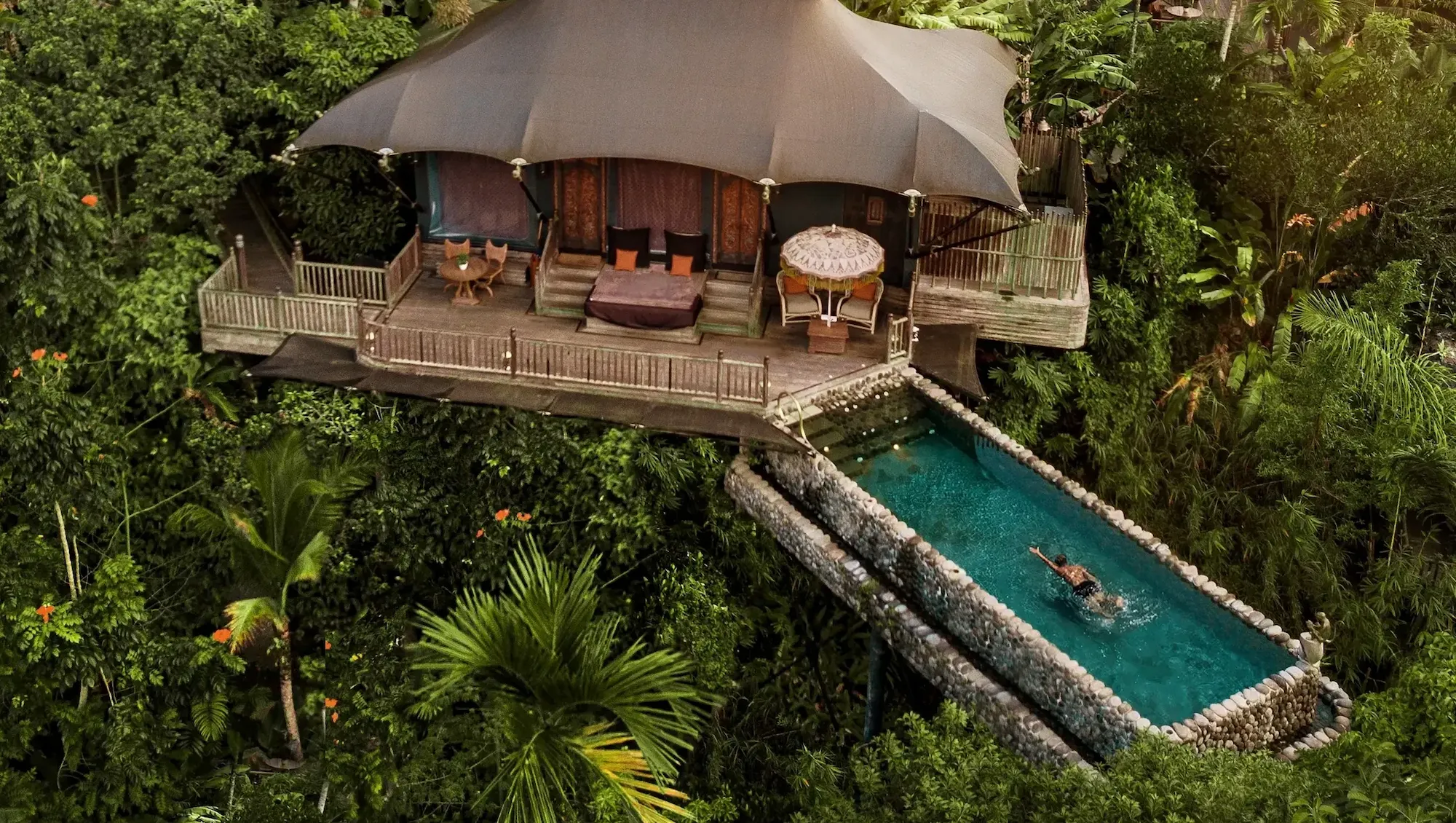
Bill Bensley's tented camp in the Keliki Valley: twenty-three tents, each with a private pool and a hammered copper bath, jungle pressing in from all directions. Bensley designed it around the trees — not a single one was felled — which is why the paths wander. The reference is 19th-century expedition camp, executed with an obsessive level of prop detail, and it is the most theatrical hotel on this list by a wide margin.
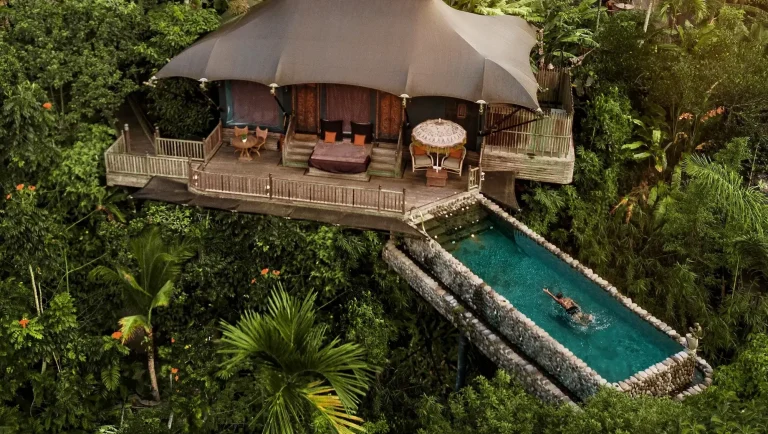 Capella UbudBali, IndonesiaSee the hotel →
COMO Shambhala Estate
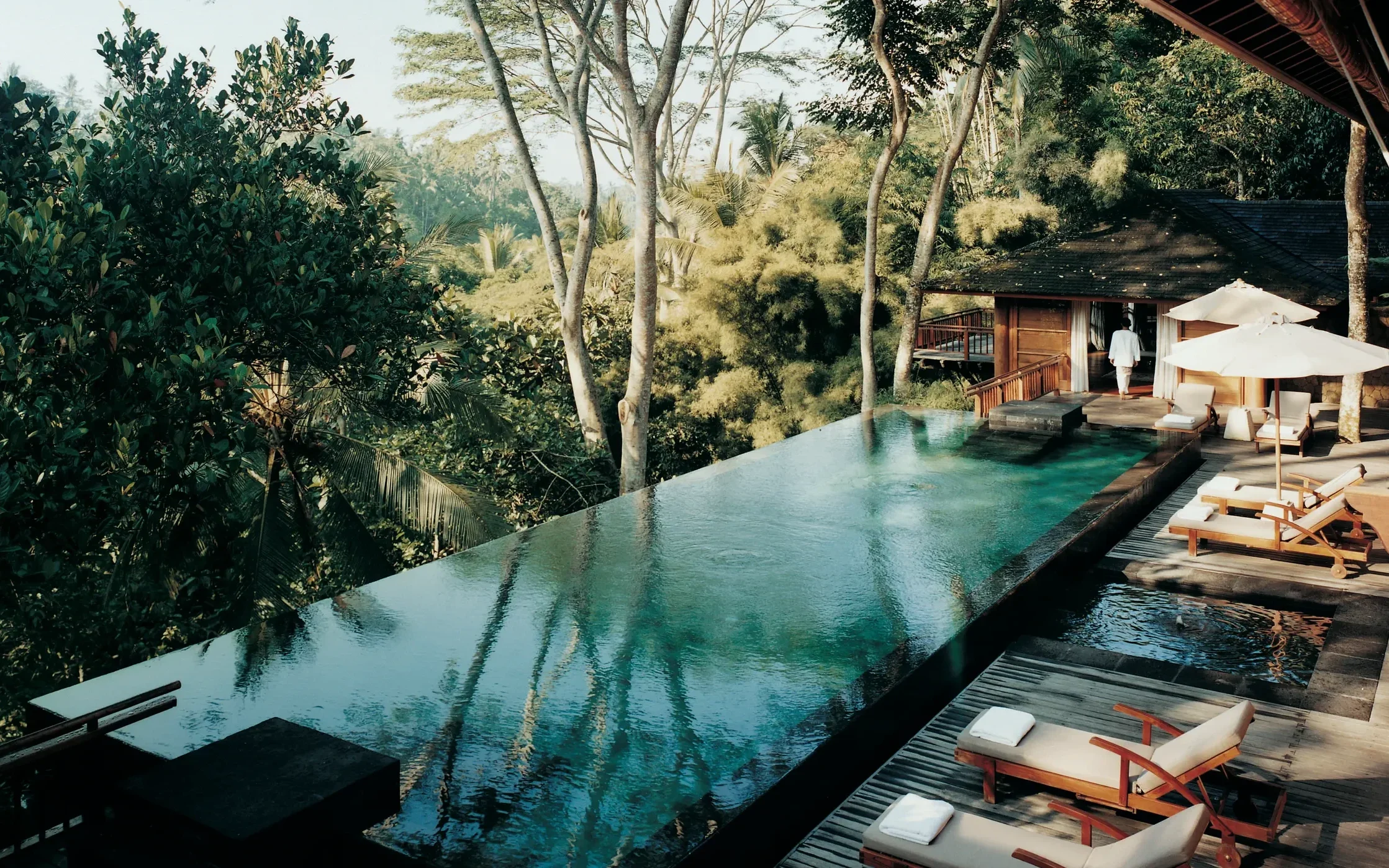
A secluded wellness estate on twenty-three acres of jungle near Ubud, with thirty rooms and suites and three public pools, one fed by natural spring water. This is the serious end of Balinese wellness — resident practitioners, structured programmes, a hydrotherapy pool — rather than a spa menu attached to a hotel. Come with an intention or the framework will feel excessive.
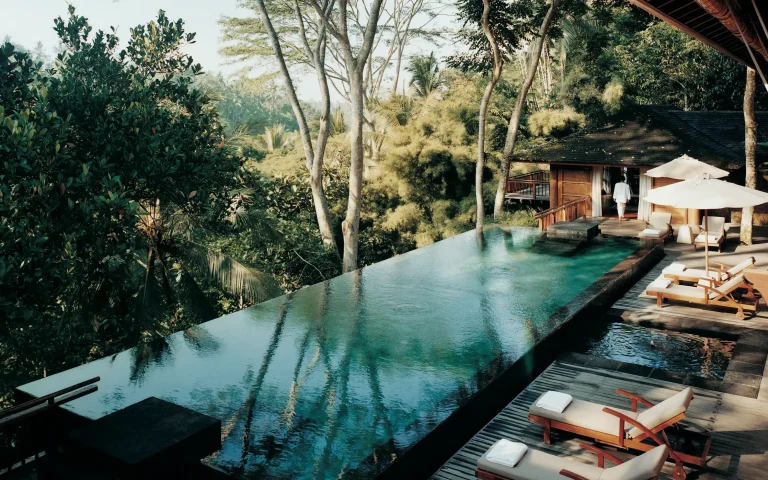 COMO Shambhala EstateBali, IndonesiaSee the hotel →
Practicalities: Ubud is roughly ninety minutes from Denpasar airport, longer in traffic, which is constant. The dry season runs April to October. And the jungle is genuinely humid — if you are coming from the coast, expect everything in your bag to feel slightly damp by day two. That is part of it.